
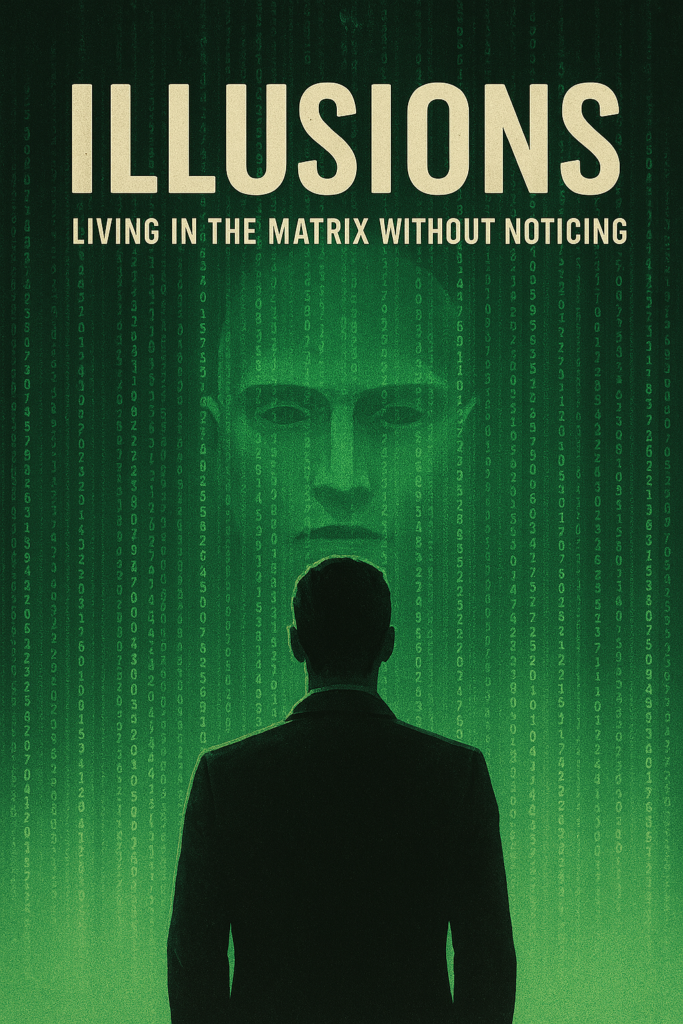
ILLUSIONS: Living in the Matrix Without Noticing
Somewhere along the way, we stopped asking questions. We wake up to the hum of notifications, scroll through curated feeds, follow the rules we never agreed to write, and call it freedom. Day after day, the script runs smoothly: work, consume, repeat. But if you pause—just for a heartbeat—you feel it. That low-frequency unease vibrating in your gut. That whisper in the back of your mind asking, Is this all there is? That unshakable sense that something about this world doesn’t feel real.
You’re not crazy. You’re not paranoid. You’re just starting to see the cracks in the facade.
This isn’t the Matrix of Hollywood fame—no green code raining down, no leather-clad saviors unplugging us from pods. The truth is subtler, more insidious, and far more pervasive. We’re trapped in a system of illusions—carefully engineered realities designed to keep us compliant, distracted, and numb. The most terrifying part? We’ve lived in it so long that we don’t even notice anymore. It’s the air we breathe, the lens we see through, the cage we’ve mistaken for home.
The Illusion of Democracy: Voting for Shadows
Take democracy, the sacred pillar we’re told defines our freedom. We’re taught that our voice matters, that every ballot we cast shapes the future. But peel back the curtain, and the stagecraft becomes clear. Real power doesn’t flow from voting booths—it pools in private boardrooms, elite fundraisers, and offshore accounts. Corporate donors bankroll campaigns, global finance giants dictate policy, and unelected technocrats pull levers we’ll never touch. Politicians? They’re actors, polished and rehearsed, delivering lines scripted by lobbyists and special interest groups.
Consider the 2020 U.S. election cycle: candidates collectively raised over $14 billion, much of it from megadonors and Super PACs. The average voter’s $20 donation or handwritten ballot doesn’t stand a chance against that tide of influence. Or look at the revolving door between government and industry—former regulators slide into cushy corporate gigs, while ex-CEOs draft legislation. It’s not a conspiracy; it’s a machine. We’re not choosing our destiny—we’re picking which flavor of the same pre-packaged narrative we’ll swallow next. Red or blue, left or right, it’s still the same script with different costumes.
The Illusion of Scarcity: Abundance Behind Barbed Wire
Then there’s scarcity, the myth that keeps the gears turning. We’re told there’s not enough—not enough housing, not enough food, not enough money for schools or hospitals. The news cycles through images of empty shelves and tent cities, while politicians wring their hands and promise solutions that never come. Meanwhile, the numbers tell a different story. In 2023, the world’s billionaires added $3.3 trillion to their wealth, according to Bloomberg. American corporations posted record profits—$2.8 trillion in after-tax earnings—while food waste alone could feed millions, and vacant homes outnumber the homeless six to one.
The truth is stark: we live in a world drowning in abundance, but it’s locked away behind gates of greed and inefficiency. Scarcity isn’t a fact—it’s a tool. It keeps us scrambling, pitted against each other in a zero-sum game. Neighbors become rivals, clawing over crumbs while the banquet table stays out of reach. It’s why we cheer when a billionaire launches a rocket but shrug when a family sleeps on the street. Scarcity turns citizens into consumers, too exhausted and divided to demand the keys to the storehouse.
Look at the global south, where fertile land grows cash crops for export while local populations starve. Or the U.S., where pharmaceutical giants sit on patents for life-saving drugs, pricing them out of reach to maximize shareholder value. The illusion of scarcity doesn’t just sustain inequality—it weaponizes it.
The Illusion of Freedom: Liberty as a Subscription Service
We tell ourselves we’re free because we’ve got options. Apple or Android. Netflix or Hulu. Thai takeout at midnight or pizza by drone. But those are the crumbs of liberty, not the meal. Real freedom—the kind that lets you say no to a soul-crushing job, grow your own food without zoning laws strangling you, or move through the world without a dozen permits and passwords—has been shrink-wrapped and sold back to us as a premium add-on.
Think about it: try building a home without navigating a labyrinth of regulations, fees, and corporate gatekeepers. Try opting out of the digital panopticon—every click tracked, every dissent flagged—without being labeled a crank or a threat. Even our time isn’t ours; the 40-hour workweek (often more) devours it, leaving us too drained to question why we’re running on this treadmill in the first place. We’ve traded autonomy for convenience, bartered sovereignty for next-day shipping, and called it progress.
The Amish, for all their quirks, offer a glimpse of what we’ve lost. They reject much of modernity not out of dogma, but to preserve a life where community and self-reliance outweigh corporate dependence. Contrast that with our “freedom” to choose between 47 brands of toothpaste while rent eats half our paychecks. The illusion is that choice equals power—but it’s a distraction from the chains we don’t see.
The Illusion of Powerlessness: The Lie That Binds It All
The final trick—the glue holding this house of cards together—is the belief that we’re helpless. That we’re just one voice, one vote, one pair of hands against a monolith too vast to challenge. That resistance is a pipe dream, a relic of history books. But history itself proves otherwise. The powerful don’t change the world—they cling to it. It’s the awake, the defiant, the ordinary who shift the tides.
Think of the Civil Rights Movement: it wasn’t senators or CEOs who broke segregation—it was marchers, boycotters, and preachers who refused to bend. Or the fall of apartheid, driven by grassroots pressure and global solidarity, not benevolent decrees from above. Even smaller acts—like the Dutch resistance smuggling Jews past Nazi checkpoints—show that power crumbles when people stop playing along.
This system only stands because we prop it up. We fund it with our dollars, fuel it with our compliance, sustain it with our silence. But the moment we withdraw that consent, the illusion falters. One person opting out might be a ripple—ten million doing it is a tsunami.
Waking Up: The Most Dangerous Act
You don’t need to storm the gates or torch the machine. You just need to see it for what it is. Once the illusions crack—once you spot the strings behind the puppet show—everything shifts. You start asking why your tax dollars fund endless wars but not clean water. You question why CEOs earn 300 times your wage while you’re told to “work harder.” You notice the headlines screaming division while the same elites toast behind closed doors.
It changes how you move through the world. You might grow a garden, even if it’s just a few pots on a balcony, to reclaim a sliver of independence. You might speak up—voice trembling—when the room stays silent. You might ditch the doomscroll and talk to your neighbor instead. Small acts, yes, but they’re the threads that unravel the tapestry.
Because here’s the truth: the most dangerous thing you can be in this world is awake. Awake to the democracy that’s a theater, the scarcity that’s a lie, the freedom that’s a lease, and the powerlessness that’s a myth. This isn’t fiction or philosophy—it’s the reality staring us down, daring us to blink.
The Matrix is real, built not of code but of illusions we’ve learned to love. The only question left is how long you’ll keep playing your part—or whether you’ll step off the stage and write a new one.